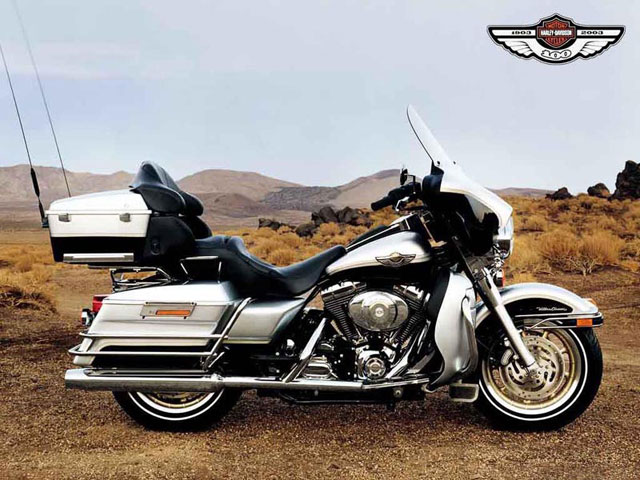
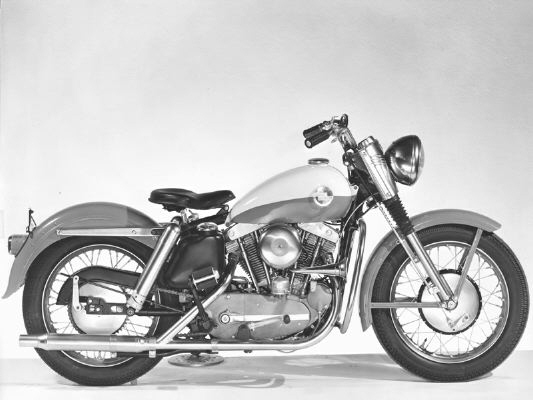
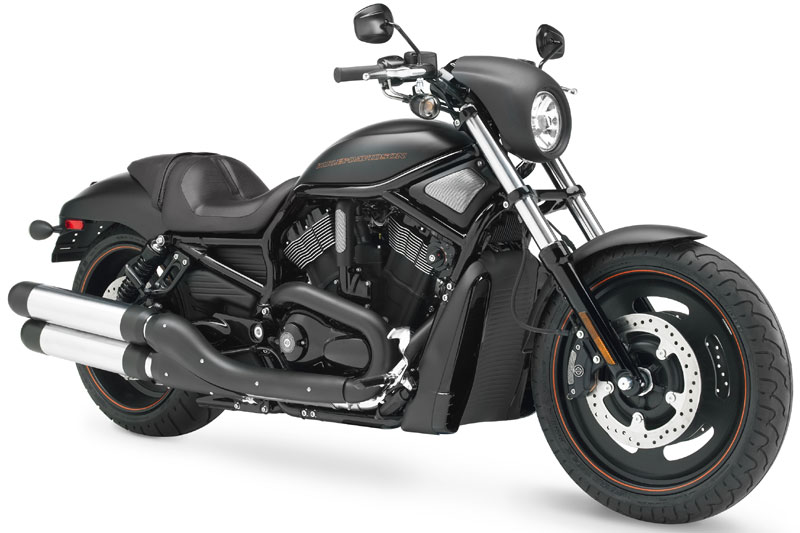
Harley-Davidson , often abbreviated H-D or Harley, is an American motorcycle manufacturer. Founded in Milwaukee, Wisconsin, during the first decade of the 20th century, it was one of two major American motorcycle manufacturers to survive the Great Depression. Harley-Davidson also survived a period of poor quality control and competition from Japanese manufacturers. The company sells heavyweight (over 750 cc) motorcycles designed for cruising on the highway. Harley-Davidson motorcycles (popularly known as "Harleys") have a distinctive design and exhaust note. They are especially noted for the tradition of heavy customization that gave rise to the chopper style of motorcycle. Except for the modern VRSC model family, current Harley-Davidson motorcycles reflect the styles of classic Harley designs. Harley-Davidson's attempts to establish itself in the light motorcycle market have met with limited success and have largely been abandoned since the 1978 sale of its Italian Aermacchi subsidiary. Harley-Davidson sustains a loyal brand community which keeps active through clubs, events, and a museum. Licensing of the Harley-Davidson brand and logo accounted for $40 million (0.8%) of the company's net revenue in 2010.
In 1901, William S. Harley, age 21, drew up plans for a small engine with a displacement of 7.07 cubic inches (116 cc) and four-inch (102 mm) flywheels. The engine was designed for use in a regular pedal-bicycle frame. Over the next two years, Harley and his childhood friend Arthur Davidson labored on their motor-bicycle using the northside Milwaukee machine shop at the home of their friend, Henry Melk. It was finished in 1903 with the help of Arthur's brother, Walter Davidson. Upon completion, the boys found their power-cycle unable to conquer Milwaukee's modest hills without pedal assistance. Will Harley and the Davidsons quickly wrote off their first motor-bicycle as a valuable learning experiment. Work immediately began on a new and improved second-generation machine. This first "real" Harley-Davidson motorcycle had a bigger engine of 24.74 cubic inches (405 cc) with 9.75 inches (25 cm) flywheels weighing 28 lb (13 kg). The machine's advanced loop-frame pattern was similar to the 1903 Milwaukee Merkel motorcycle (designed by Joseph Merkel, later of Flying Merkel fame). The bigger engine and loop-frame design took it out of the motorized-bicycle category and would help define what a modern motorcycle should contain in the years to come. The boys also received help with their bigger engine from outboard motor pioneer Ole Evinrude, who was then building gas engines of his own design for automotive use on Milwaukee's Lake Street.

The prototype of the new loop-frame Harley-Davidson was assembled in a 10 × 15 ft (3.0 × 4.6 m) shed in the Davidson family backyard. Most of the major parts, however, were made elsewhere, including some probably fabricated at the West Milwaukee railshops where oldest brother William A. Davidson was then toolroom foreman. This prototype machine was functional by September 8, 1904, when it competed in a Milwaukee motorcycle race held at State Fair Park. It was ridden by Edward Hildebrand and placed fourth. This is the first documented appearance of a Harley-Davidson motorcycle in the historical record.


In January 1905, small advertisements were placed in the "Automobile and Cycle Trade Journal" that offered bare Harley-Davidson engines to the do-it-yourself trade. By April, complete motorcycles were in production on a very limited basis. That year, the first Harley-Davidson dealer, Carl H. Lang of Chicago, sold three bikes from the dozen or so built in the Davidson backyard shed. (Some years later the original shed was taken to the Juneau Avenue factory where it would stand for many decades as a tribute to the Motor Company's humble origins. Unfortunately, the first shed was accidentally destroyed by contractors in the early 1970s during a clean-up of the factory yard.) In 1906, Harley and the Davidson brothers built their first factory on Chestnut Street (later Juneau Avenue). This location remains Harley-Davidson's corporate headquarters today. The first Juneau Avenue plant was a 40 × 60 ft (12 × 18 m) single-story wooden structure. The company produced about 50 motorcycles that year.


In 1907, William S. Harley graduated from the University of Wisconsin–Madison with a degree in mechanical engineering. That year additional factory expansion came with a second floor and later with facings and additions of Milwaukee pale yellow ("cream") brick. With the new facilities production increased to 150 motorcycles in 1907. The company was officially incorporated that September. They also began selling their motorcycles to police departments around this time, a market that has been important to them ever since. Production in 1905 and 1906 were all single-cylinder models with 26.84 cubic inches (440 cc) engines. In February 1907 a prototype model with a 45-degree V-Twin engine was displayed at the Chicago Automobile Show. Although shown and advertised, very few V-Twin models were built between 1907 and 1910. These first V-Twins displaced 53.68 cubic inches (880 cc) and produced about 7 horsepower (5.2 kW). This gave about double the power of the first singles. Top speed was about 60 mph (100 km/h). Production jumped from 450 motorcycles in 1908 to 1,149 machines in 1909. By 1911, some 150 makes of motorcycles had already been built in the United States – although just a handful would survive the 1910s.

In 1911, an improved V-Twin model was introduced. The new engine had mechanically operated intake valves, as opposed to the "automatic" intake valves used on earlier V-Twins that opened by engine vacuum. With a displacement of 49.48 cubic inches (811 cc), the 1911 V-Twin was smaller than earlier twins, but gave better performance. After 1913 the majority of bikes produced by Harley-Davidson would be V-Twin models. By 1913, the yellow brick factory had been demolished and on the site a new 5-story structure of reinforced concrete and red brick had been built. Begun in 1910, the red brick factory with its many additions would take up two blocks along Juneau Avenue and around the corner on 38th Street. Despite the competition, Harley-Davidson was already pulling ahead of Indian and would dominate motorcycle racing after 1914. Production that year swelled to 16,284 machines.